08/03/2015

Landscape Photography Evaluation


The theme for this project was landscape photography and I definitely wasn't as excited as I have been for my other projects. This is because being in the middle of winter I knew it would be very challenging to get out and get some good landscape photographs with the unpredictable and restrictive lighting available at this time of year. The most enjoyable part of this project for me was going out into the Peak District and basically having a nice day out hiking, and taking photos for my project. I also found researching the photographers and learning about their conceptual ideas and techniques really interesting.

New techniques I've experienced in this project include using HDR, long exposure times and using photographic tools such as diagonal lines, rule of thirds, framing devices and generally being more aware of things like composition and vantage points. I would definitely like to develop my use of HDR photography a lot further as when I tried it I didn't have a good subject matter or great conditions for a good photograph anyway so it would be nice to try this technique again with better conditions and location.

During this project I researched photographers such as Fay Godwin, John Blakemore, Luca Lupi, Charlie Waite and Ivvy Million. They have influenced my work in terms of their conceptual ideas and techniques and all the subject matters they use such as John Blakemore looking for textures in landscapes. 

The technique I enjoyed using most in this project was experimenting with composition and looking for tools such as diagonal lines, rule of thirds and framing devices to really improve the compositional quality of my images. Personally I think the most successful part of my project was my Ivvy Million inspired photographs, where I used elements of her technique to go out and take my own landscape photographs on a particularly snowy day in the Peak District. I was just pleased with how they turned out and they recorded what was a really lovely day out. 

Problems I encountered in this project included time issues because there isn't a lot of light about at this time of year and I'm also at college so it was really hard to get out to the places I wanted to photograph and have a good amount of time with sunlight. I also struggled with my subject matter as at this time of year the countryside can just look really barren especially without leaves on the trees which didn't really excite me as a photographer hence why my work isn't particularly exploratory. 

Given the chance to complete this project again I would like to have explored more abstract forms of landscape photography, and I also would have liked to find better locations to photograph and make sure I can stay out later so that the sunlight isn't as harsh when I'm photographing as that was a really big problem for me doing this coursework. 

Overall I did find this project challenging however I do think a lot my issues were out of my control in terms of my resources and the time constraints and restrictions I have in terms of where I live and how much time I have to go out into the countryside to take photographs. 

Ivvy Million // Snow Photographs


I came across Ivvy Million's work while looking at landscape photography on Flickr and was really drawn to her take on landscape photography and the way she edits her photographs. She mainly gives her images a style that is very much like a lot of wedding photography at the moment where the contrast is lowered on purpose, to give a more aged but modern and fresh look to the image. Because of this effect black shades in the image are never completely dark and white colours are not bright and completely white, therefore the image is made up of more mid tones that have a more grey quality. This effect like in Fay Godwin and John Blakemore's work where they have used the zoning system, gives the subject matter more texture which I really like especially in the images above where the sky doesn't have a vast amount of detail in terms of lots of clouds being there and instead this takes less focus away from the bright sky and the lighting is evened out across the entire image through the lowering of the contrast. 

Limestone and Wildflowers
Above is a photograph by Million that I find particularly captivating due to the high amounts of texture she has managed to get from her subject matter which makes this landscape look very surreal, especially with the vantage point she has taken the photograph at where we can see where the land changes, but the lack of diagonal lines means this image does look strangely flat which in this form looks quite abstract. Personally I think this use of horizontal lines creates an interesting effect especially within this rural landscape where everything does look so varied. I think it's ironic that the clouds to me feel like the main source of dimension in this image, and I really think they contrast well with these rich green shades we can see on the land below. 

Change Comes Slowly and All At Once
Above is an example of some of the techniques Million uses that really make her work intriguing for me. The use of framing devices in these ways adds something completely different to these photographs and also offers an interesting perspective, which gives the photographer a more personal connection to the image and for the viewer a connection to the photographer. What I like about this image in particular is something you don't really see often with a lot of traditional landscape photography which is the use of a lower f/stop, which in this image makes the inside of where this photo is being taken out of focus giving real distance and dimension in this image, giving much more of a sense of this for us as viewers. 

Looking at Ivvy Million's work has given me a lot more to think about in terms of what I can do with composition in my images, and how I can use colours and editing techniques to give a more personal aesthetic to my photographs. Using my DSLR I went out into the Peak District after it had been snowing to attempt to try out some of Million's techniques and to experiment with composition further.


I took this particular shot as I remembered the photograph of Million's I had looked at called "Limestone and Wildflowers", where a winding road could be seen in the background and how I really liked the look of that with the horizontal lines breaking up the landscape. I don't think this photograph was as successful but I do like what a road like this can do to a landscape photograph in adding a point of interest for the viewer and contrast with the natural landscape around it. 

The main problems I found on this day were that the sky was uninteresting and with the white snow made for some very plain looking images in my opinion. However because the snow was there it meant the ground was pretty much just as bright as the sky meaning I had less of a battle with exposure then I have done on previous shoots. 


This was a particularly random photo from my shoot that I actually really like. The focus on the person in the foreground was something I did on purpose as it is my mother, and I thought it added quite a personal touch in that you can see my tripod poking out of her bag. I guess this comes across as more travel photography, however I think the three figures in the photograph add an interesting sense of scale that lead you to the top of Man Tor. The name Man Tor actually means mother hill so I find it quite ironic that I took a photo of my own mother hiking up it, but I guess that isn't obvious at all to a random observer. However I think like in the photo I talked about earlier by Million, this use of a lower f/stop really adds something intriguing and gives a whole new way of looking at this landscape which has been photographed by many. 


I tried to find a lot of natural framing devices on the day to create some of the effects Million has demonstrated in her images. This was my personal favourite which was a gap I found between a load of rocks pilled on top of one another on Man Tor that gave a view across the landscape below. I don't think this was particularly successful as the sky was really misty on the day meaning the landscape that we are looking at into the distance just looks hazy and not very clear at all. 


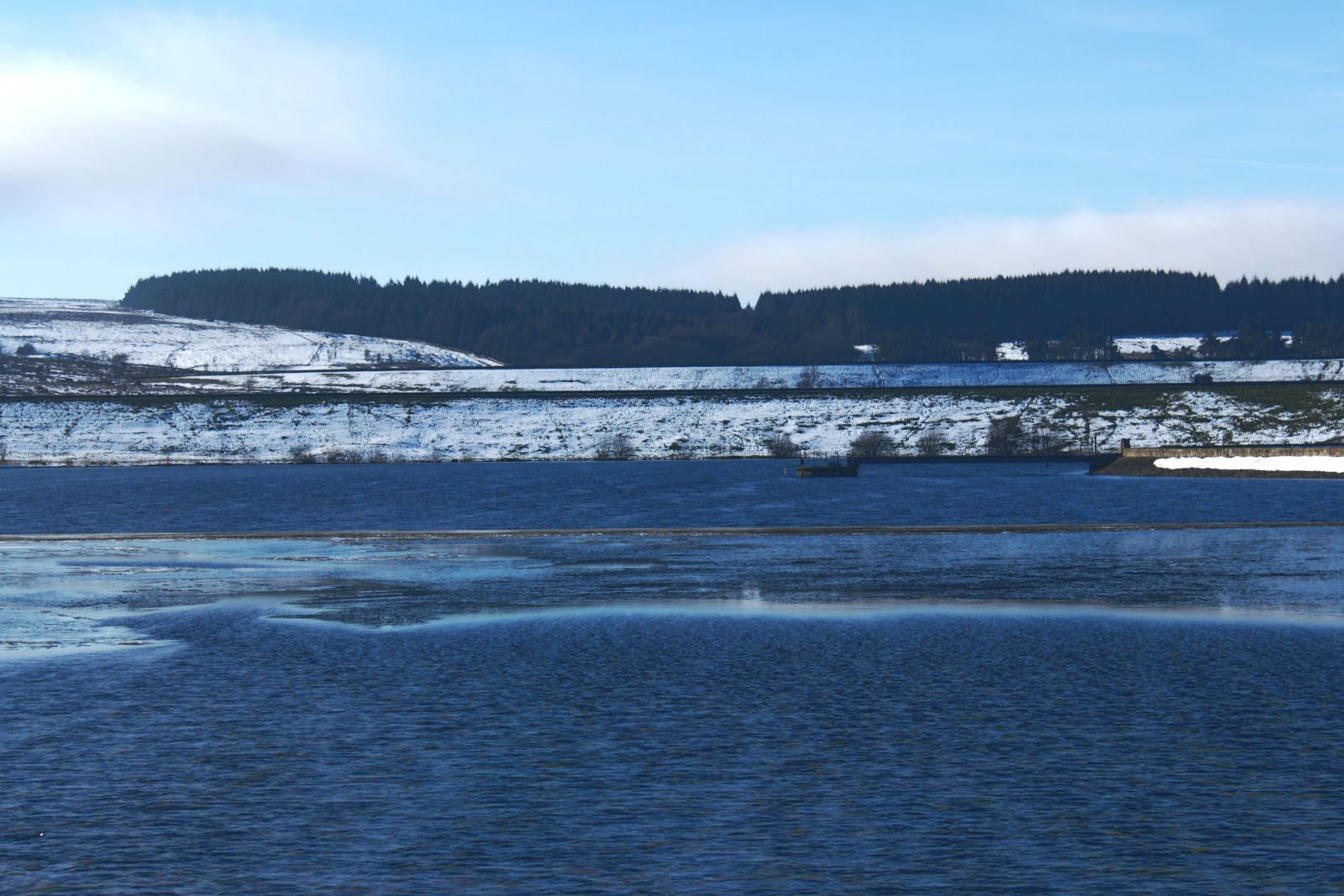
Above is my favourite photograph that I took on this shoot. This is because I think it was exposed perfectly as there is a good amount of detail from the sky and the land creating a vast amount of texture in this image. I also really like the way this hill in the foreground breaks up the hills in the background giving a more dynamic sense of dimension to this image. I definitely think the framing of my photographs is improving now and I am definitely thinking a lot more about composition techniques such as the rule of thirds. 


Overall I am fairly happy with what I have produced in this shoot, however I did still struggle with exposing a few of these images as the sky was really bright and hazy, but that is out of my control as a photographer and I would just need to go back on a day where the conditions are better in order to get better quality images. 

Charlie Waite // Vibrant Landscapes

Charlie Waite is a renowned British landscape photographer, well known for his more colourful and artistic approach to the genre of landscape photography. I was instantly drawn to his work when looking for more contemporary landscape photography online. Waite's photographs are vivid and bright, and to me really bring something more surreal and abstract to landscape photography, through the powerful use of composition and colour. 

This is one of my favourite landscape photographs taken by Waite while in Tuscany. I think this image is particularly powerful because of the mysterious, dark mood it has, which Charlie Waite has created through the powerful use of light and shadows and in particular the colours in both the sky, and the shades of green on the land which look really surreal. One thing that I find particularly interesting about Waite's work is his brilliant use of the rule of thirds which helps create these powerful compositions in his work and such energy and tension between his subject matter. To me Waite's work and this image in particular are digital masterpieces that show such simplicity and skill to create something so visually interesting. 

Looking at Waite's work and his powerful use of colour in a very surreal and abstract way has inspired me to experiment with changing the vibrancy in landscape photographs that I have taken previous to this project. I really wanted to find a way to incorporate some of my previous personal landscape work into this project as in the past year or so I've really enjoyed going to places during the warmer seasons and taking photographs of nature and landscapes. And I really liked the idea of giving them an unnatural look to create more abstract photographs that look unworldly and mystical.


Above is one of my personal favourites as because I have lowered the saturation to a certain extent this image looks more hazy and mysterious rather than looking completely over edited. I also think this effect with the purple colour creates a really eerie and dark mood to what was originally a very straight forward photograph that I took of a town in Lancashire.


Overall I am really pleased with how these experiments turned out and they have definitely made landscape photography more interesting for me, as I do like to be more artsy and creative with my work. After looking at Waite's photos I now want to work harder to create better compositions and deal with lighting better as the use of shadows and light I found really powerful in Waite's work. 

Luca Lupi // Landscapes + Creating A Panorama


"The images are intended to be "modular." In other words, they can be moved and rearranged in different visual sequences to form endless landscapes. Thus, the goal of this work is to reflect on the complex and continuous transformations of our environment. The changing relationship between built and natural forms is what gives shape to our contemporary world."

I came across Luca Lupi's Landscapes series on Lens Culture the other day and felt instantly inspired by his unique composition and conceptual ideas with his series of landscape photographs. All the photographs in this series were taken from the same distance from the land, out at sea so that the horizon line would be the same in all of Lupi's photographs. This concept is really great and makes for an interesting exhibition, as this means all of Lupi's photographs can be stitched together to create a panoramic type photograph, and you can make an infinite number of combinations as they will all stick to one another because they all have the same horizon. 

I really like this about the series because the individual photographs are not consecutive and range from cityscapes, woodland, beaches and a quite industrial areas are featured in his series as well. Because of this I think these photographs really make a comment on capitalism and globalisation, as these photos really reflect the effect of humans on the natural landscape, in particular showing contrasts between these rich green woodland areas and grey and dark cityscapes and industrial areas. Because of the use of this same horizon line I really get the idea that Lupi is trying to communicate, this idea that we were given a canvas with the world around us and to show what we've done with it. Yes all these photographs look beautiful and show the continuous transformation of our landscapes in the modern world, but to me it does show something quite sad and reveals the stark differences between the natural and industrialised and built up landscapes, especially through the colours that we can see in the photographs. 


Concept aside, I do really love the composition and aesthetic to Lupi's Landscapes photographs. I love the large amount of negative space created by the cloudless sky, which really gives a sense of depth in terms of how significant the land actually is when you think about how high our atmosphere stretches. I think to chose this amount of sky in his images was a really interesting choice which I think works perfectly to help the viewer focus on the contents of the land itself, rather than the shape of the actual land and really focus on what Lupi is trying to show through these images which was the relationship between humans and the natural landscape. 

I also really like the pale tones in these images which really show off the natural green shades well amongst the brown and grey industrial structures. In this particular photograph above these two chimneys from what looks like a power station really stand out from the land and create an interesting focal point which adds to the land's flat shape with the stations entire geometrical appearance which really makes this landscape look surreal and unworldly from this unique vantage point.

From looking at Luca Lupi's Landscapes series I've been inspired to think about composition more in my photographs and the tones of the colours within my images. I've also thought about how my images would look altogether as a series and how different photos of landscapes can go together whether merged or simply having the same aesthetic and compositional layout like in Lupi's images. With these ideas I went out into the countryside in Derbyshire on a day with a clear sky to conduct some experiments with composition and the other ideas I have gathered from looking at Lupi's work. 


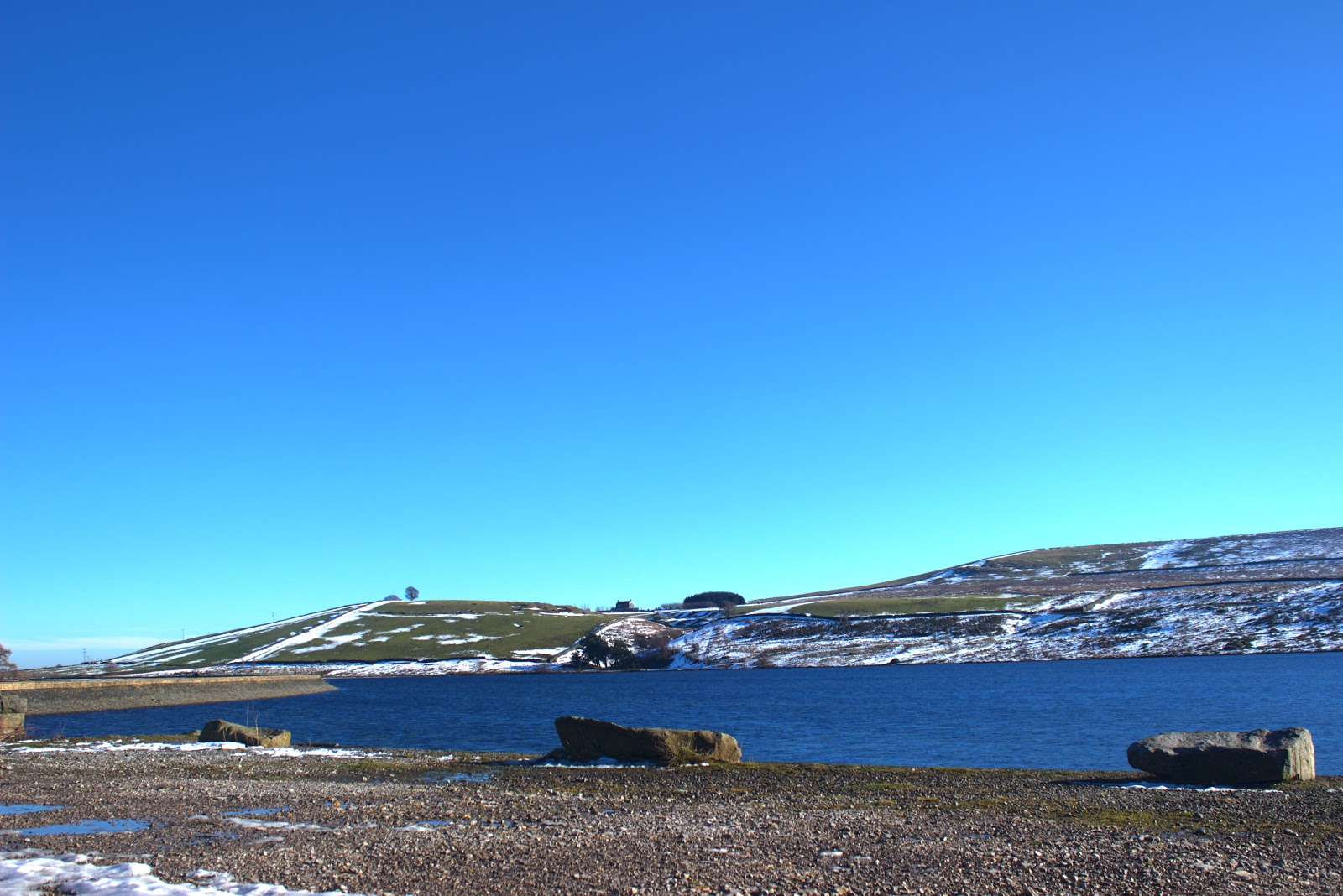
I really like the composition of this image as this bold wall acting as a diagonal line really breaks up and adds dimension to what could have looked like a really flat image in terms of the subject matter. It also gives an interesting focal point to the image and creates a striking contrast with the bright blue sky above. 


This is one of my favourite photographs from the shoot as I really like how the focus is on this manmade stone wall but we can still see the shape and colours of the landscape in the distance. I put a blue filter on my images to really give these green and warmer tones more of a pale quality like in Lupi's images, which I think creates a really nice complimentary effect with the bright blue sky above. 


This image like in the one of Lupi's I looked at has an interesting geometrical quality which I really like visually, the fence also creates this diagonal line which really breaks up the image and gives an interesting focal point on this landscape. 


My last photo shows a view of Sheffield. I really like the dark tones in this image and the way you can see the countryside turning into a cityscape. Ideally I would have given more space for the sky but I do like this transition you can see across the land.


As Lupi's photographs can be stitched together to create a giant panoramic piece I decided to try creating my own panoramic shot of a view I came across when out taking my photos at Lodge Moor. A panorama is simply an image that shows a wide continuous view of what surrounds an observer. I created my panorama by positioning my camera on my tripod and keeping it so I could keep it at the same height but move it sideways freely. I then kept my aperture the same as with my other settings and took a photo of the view around me, making sure that the same parts of the view were in the photos but moved slightly, so that they could be merged together with ease. I then used the panoramic settings in Photoshop to merge my selected image automatically. 

I really liked being able to create such a wide shot of a lovely view I came across while out walking. I'm not overly keen on the style of layering this photos in a more horizontal style but I'm glad to have experimented with this technique, and would like to use it in future to record great views like this one, and I would also like to try layering images like this by hand.

Overall I really enjoyed experimenting with this more minimal style aesthetically and creating interesting compositions with my landscape photography. However these photos do lack the detail and strength visually that Lupi's have and I would now like to try some other methods of arranging landscape images and taking them.

High Dynamic Range | HDR

As I have struggled with lighting a fair bit so far during this project, I decided to try out creating some high dynamic range images (HDR) whilst out walking. Single photographs taken with a camera can only see 5 stops of exposure where as the human eye has 11 - 14 stops of exposure value. This is why single photographs cannot take on strong differences in light very well and why the true colour and detail is never quite the same, explaining why something may come out really dark on an image because another part of the subject matter is very bright. HDR images are created by taking the same photograph on a tripod so that nothing moves, the aperture is also kept the same and all you have to do is take at least three different photographs with different exposures so that you can get detail from the dark and light areas. 

Softwares like Photoshop have HDR functions that will automatically put your images together and then allow you to change things like the vibrancy and contrast of the final images. But overall you end up with photographs of much more detail as you can brighten darker areas and darken bright areas and still keep a large amount of detail in your photograph. The only thing to consider with HDR images is that they can look a bit unrealistic and not as representative as the landscape in real life as you can see in the images above, as colours look a lot more vibrant they look like they have a very high contrast on them. 

I decided to show how I assembled my HDR images on Photoshop as I haven't shared any of my Photoshop work in detail in my coursework yet. 

As you can see it is really simple to do this on Photoshop as they have a feature that allows you to automatically merge your photos to create a HDR image. First you just click on the File tab, hover your mouse over the automate button and click on the merge to HDR option. 


A box will then appear allowing you to browse and select the photos you want to merge together.

A screen will then appear with your merged image giving you the option to make adjustments to things such as shadows and highlights. Once you are happy with your image simply click ok, make any other edits you want to and then save the image.

Below are the HDR images I have created out of photos I took on my tripod whilst out walking at Lodge Moor the other day.


I haven't picked out any favourites from this set of images as I am not overly pleased with how any of them turned out. I do like the technique and it's really helped these photos as the sun was incredibly bright where we were. However HDR aside the conditions just weren't there for some good landscape photographs, because of the lighting and how bright and clear the sky was. I am finding it hard with the subject matter especially at this time of year as there isn't a lot of sunlight around during the day and when it is there it's too bright. It's also really hard for me to get out to places I'd like to take these photos and when I do it's a shame when it's this bright and hard to work with. 

I do like this method for creating images and would like to use it again in my work where possible. Because I found the lighting such a problem I hopefully want to find some ways around that and I also want to improve on my framing and the composition of my images as I really wasn't pleased with how I framed and composed the images above. They just are really bland photographs in my opinion and don't reveal anything about the subject matter in particular or anything more emotional in connection with nature like in my previous photos which I was a lot happier with.