20/11/2016

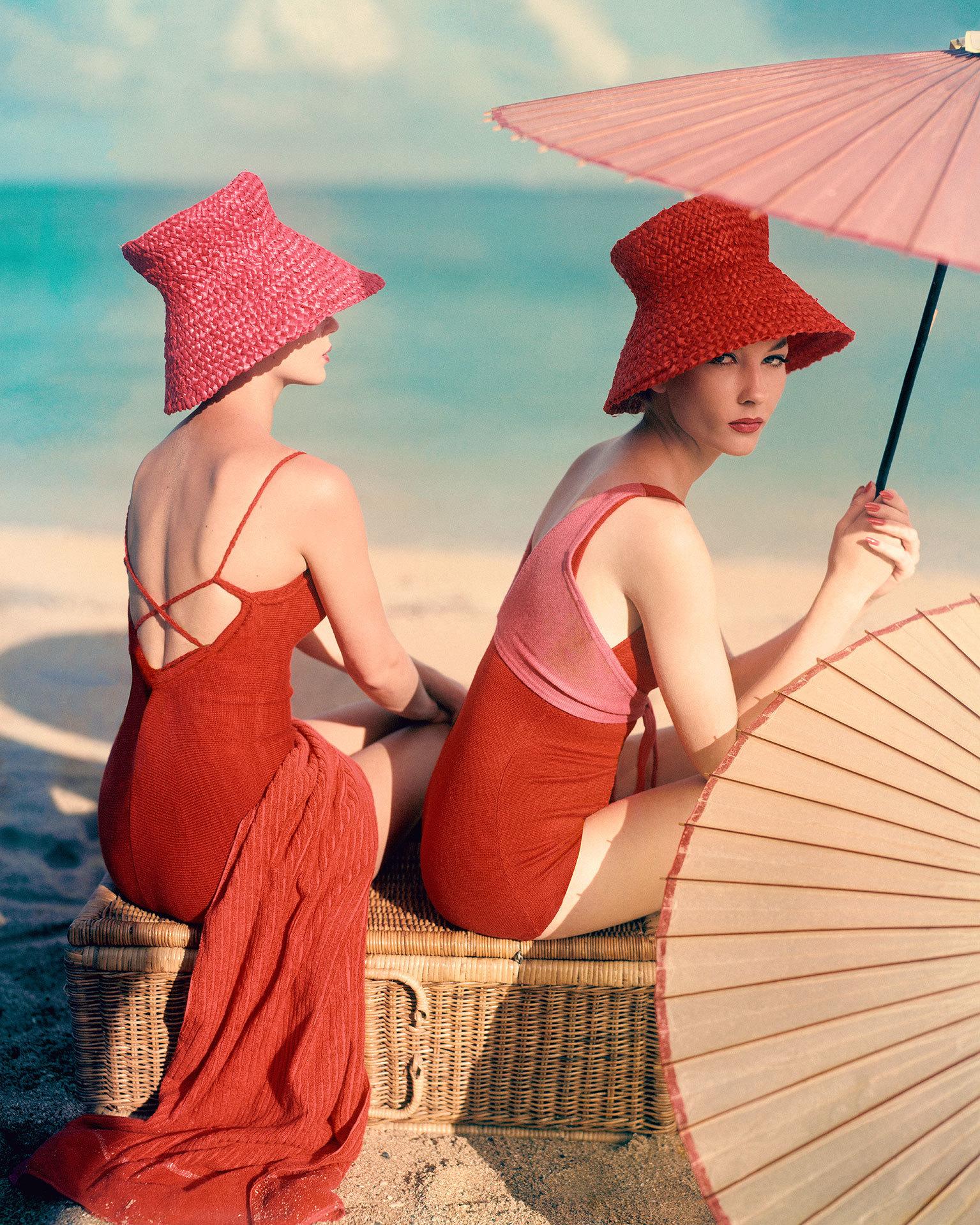
Louise Dahl Wolfe


Liz Gibbons as photographer, 1938

"Although Louise planned every picture meticulously, her photographs look like she just serendipitously chose the perfect moment to snap the girl with her scarf blowing in the wind. They were more like stories than portraits." —Valerie Steele        

Suzy Parker in Dior Hat, Tuileries, Paris, 1950
I came across Louise Dahl Wolfe's work whilst looking at her fashion photography as she worked in the hey day of Harper's Bazaar and was one of the most celebrated photographers of the 30s, 40s and 50s. I am using her as a source of inspiration in this project because I came across some portrait photographs of hers in the book 'Louise Dahl-Wolfe: A Photographer's Scrapbook', that I felt would be particularly relevant for the kinds of portraits I want to take during this portraiture project. 

Dahl Wolfe influenced the likes of Richard Avedon and Irving Penn and was one of the first to master colour photography and use daylight for fashion photography. She brought a new vision informed by her own fine art studies, to the stilted European photography at that time. With her relaxed and empowering fashion portraits of women; often relaxed and reclining. 

As I have only looked at studio photographers so far it was really interesting for me to look at Dahl Wolfe's work as she made brilliant use of natural lighting to create portraits that feel more informal and intimate. I love her work because she captures a real sense of character in her fashion models and even though the images are of an editorial/commercial nature, there is a real sense of modesty in these photographs that I think allows women to get something more out of these images. Rather than just gazing in awe at the kind of intimidating, rigid beauty that was the focus of much of the other European distributed fashion portraits of that time. 


The work of Louise Dahl Wolfe's that I really want to use as inspiration for this project is her portraits of designers such as Christian Dior and Coco Chanel. As they are really beautiful environmental portraits that show the depth and personalities, of the faces behind these heavyweight designer labels. These observed, environmental portraits I think are particularly special because although meticulously planned out, the images often seem like candids capturing perfectly a revealing moment that has occurred.     

Like in Yousuf Karsh's photographs of artists, the environments framed with the subjects in these portraits serve to add more to the sense of their personality and character that we get in viewing these portraits of them. These photographs like in Dahl Wolfe's fashion portraits have a more earthly, natural feel about them with a real sense of fluidity in how the subjects are composed within the image. Giving us this impression of seeing a moment of activity captured in the subject, rather than them having posed for any amount of time for the shot. Which I think is an incredibly quality to achieve in a photograph. 

Looking at Louis Dahl Wolfe's work has really inspired me to think more about how I can make use of naturally lit environments in my own photographs to really inform more about my subjects in my portraits. Her work has also given me more to think about in terms of representing my subjects, as I really admire the kind of sensibility she had in her approach to taking her photographs, in rejecting the kind of fantasy that surrounded the aesthetics of formal portrait and fashion photography at that time. 

Gabrielle Motola


"Photography is all about awareness" - Gabrielle Motola
After a particularly inspiring talk from American/British photographer and writer Gabrielle Motola, I have decided to look at some of her work more closely. As I really like a particular project of hers titled The Honeyboys and some of the observed/environmental portraits she took for that series.  

Motola's work consists mainly of long term social documentary projects. One in particular she discussed that I found really interesting is titled An Equal Difference which is her most recent project, that she has created a 'photo storybook' for. The book uses photographs, stories and reflections to take a closer look at the lives and perspectives of the people living in contemporary Iceland. The book focuses in on the people of Iceland after the global financial crash in 2008. Where Iceland jailed the bankers responsible, switched to an independent renewable energy source and made prostitution illegal by criminalising buyers. Iceland have been ranked first for gender equality by the World Economic Forum Gender Gap Report for the past seven years and because of this Motola has used her work to show how pursuing gender equality can benefit societies.


Margret Pala Olafsdottir | Founder of Hjalli Schools

When looking at the portraits from this series before Motola's talk I found it really interesting how these environmental portraits often seem to capture someone in a moment of activity. Particularly in the photograph of Margret Pala Olafsdottir shown above which Motola discussed in her talk. She recalled the time she showed Olafsdottir the portraits she had taken of her and said that she responded with confusion, as she felt the photographs Motola had taken of other subjects in the project were much more flattering than the photograph taken of her. Motola said that this was a real turning point in her work as she realised she had been subconsciously seeking to flatter women with her portrait photography.


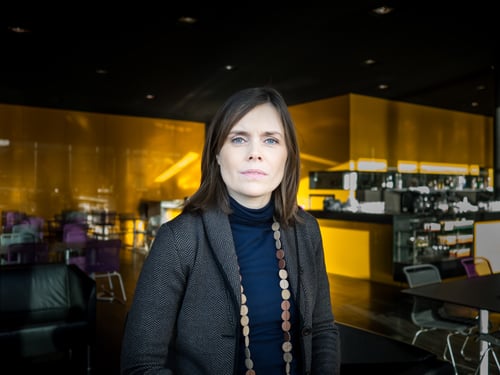
Katrin Jakobsdottir | Politician, Former Minister of Education

Because of this she returned to many of her edits and in the case of politician Katrin Jakobsdottir she found another photograph she thought was more representative of who she is as a person. Motola said she had also seen many articles about Jakobsdottir that all mentioned how young she looks for her age. I think that because a big element of Motola's project was exploring a culture which is ranked highest for gender equality, it occurred to her that she needed to be photographing men and women in the same way. Rather then trying to take as pretty a portrait as she could of her female subjects. 

I really like the more confrontational nature of Motola's photographs as the subjects are always looking directly at us as though they are waiting for a response from the audience. Which I think is particularly powerful quality in terms of the context of this project. As Motola is using this series to pose questions at an audience in regards to the social constructs of other western cultures. 


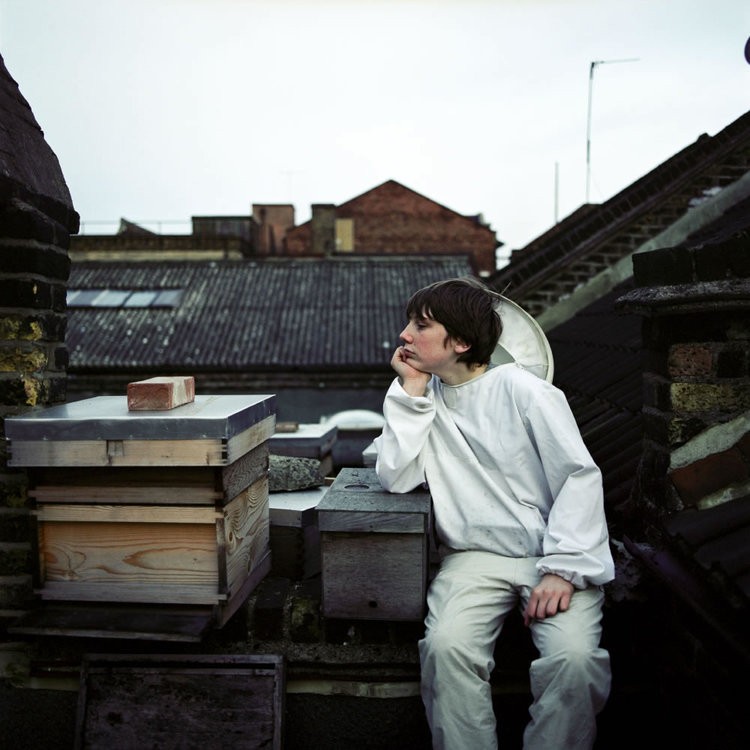
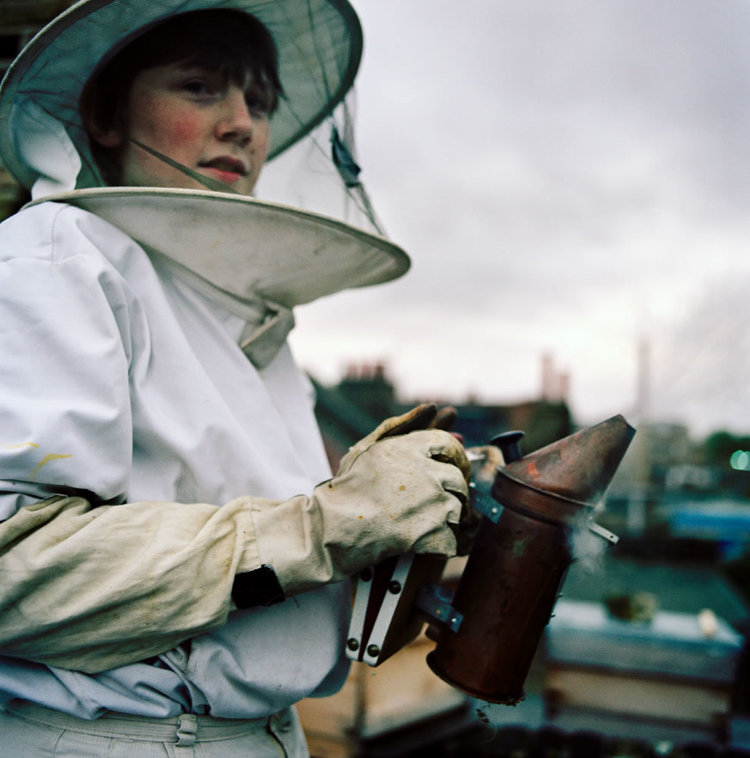
The Honeyboys Images taken from gabriellemotola.com
One of Motola's earlier projects titled The Honeyboys is what I really wanted to draw some inspiration from for my own portraiture work. As I think these images are beautiful and show some great examples of environmental and observed portraits as well as some interesting detail shots. 

The idea for this project came about in 2006 when Motola met 12 year old Phillip Schild in Broadway Market where he and his stepfather Ian were selling their Hackney honey. Created from hives on the roof of their house. Motola felt that Phillip's energy was really special along with the sight of such a young boy stood in a bee keeper's suit. At 8 years old Phillip was diagnosed with aspergers syndrome and because of this his father thought bee keeping would be a good focus for him. As he was particularly fascinated by insects and knew huge amounts of detailed information about them.

In getting to know the family further Motola decided she wanted to create a project showing the relationship between Phillip and Ian as she felt it was very special, particularly with the beekeeping. So she decided to photograph them both making their honey for The Honeyboys which she has since sold as a story to The Guardian newspaper. 

The images contain some really beautiful portraits which have a real warmth about them in showing this young boy and his stepfather's passion for beekeeping and their close relationship. One thing that is interesting to me is the way the photographs of Philip are often taken from below as though to illustrate how much this hobby lifts him and gives him purpose and control in his life. This has made me think a lot more about how photographers can really reflect how they feel about their subjects through their portraits. As I get the impression through this vantage point that Motola really admires Phillip for reasons such as his energy and passion.

One really strong element to these images is the consistency across them in terms of colour, framing, tonal quality and of course the square aspect ratio of the photographs. This to me I think helps the sequencing in the photographs showing the narrative of the tasks Phillip and Ian do together to produce honey on their roof. Aesthetically I love the richness of these green and brown colours against Phillip's bright white bee keeping suit; creating a real focus on him rather than just the tasks also being illustrated in the images. 

Looking at Gabrielle Motola's work has given me a lot more to think about in terms of visual consistency, narrative building and also how I can communicate my own thoughts about my subjects in my photographs. 

Yousuf Karsh

Audrey Hepburn, 1956

Next I have decided to look at the work of American/Canadian photographer Yousuf Karsh as he was one of the great portrait photographers of the 20th century and I love his work. He is well known for his compassionate portraits of figures from world politics, literature, science, arts and entertainment. His work particularly interests me because of his own empathy and perceptiveness that allowed him to gain incredible rapport with his subjects. I really admire that he chose to photograph personalities that influenced people's lives at that time, showing them with great insight and understanding. Karsh revealed his subject's character in his portraits in a very attentive manner, illuminating his subjects in his images which has often led to them becoming definitive portraits of the people in them. 

Albert Einstein, 1948

"Character, like a photograph, develops in darkness"
Karsh's style particularly interests me in how it brings out the subject further in his portrait photographs. One thing that is characteristic of many of Karsh's more well known photographs is his use of a black background and low key lighting. These lighting effects are similar to a lot of the hollywood glamour lighting that was being used at that time, however Karsh used it in an incredibly atmospheric way, that reveals his subjects in a very sensitive manner. 


"There is a brief moment when all there is in a man's mind and soul and spirit is reflected through his eyes, his hands, his attitude. This is the moment to record." 

One characteristic of Karsh's work that has particularly stood out to me in building up my ideas for my portraiture photographs, is his use of hands within a frame and focus on them in his photographs. In reading about this element of his work in the book 'Karsh: A Sixty Year Retrospective', I now realise the importance of hands in photographs and that they are something I need to be particularly aware of. In terms of how they work within the frame of an image and what they add to it, and also why I would not want them in a photograph.

Looking at Karsh's work has made me much more aware of how much hands can add in a portrait photograph as well as a detail shot, in revealing clues to the entire personality of a person. As hands reveal mood, attitude, tension and even little habits some people have. Therefore being aware of this could reveal even more about my subjects in my portraits of them. Karsh noted that he would never set out just to photograph a person's hands however he felt that they complement a whole image. 


Karsh's environmental portraits particularly of artists are some of my favourites he has taken. As his intimate lighting style almost changes the setting in the image into this private world of the artist we are allowed to peer into through their portrait. Which I think is a really special quality to his photographs and I especially love the way he captures artist's immersed in their own work. My favourite photograph is the one below of German Painter Josef Albers (1966), as I think the composition is just brilliant with the frame matching the shape of his square paintings. Really conveying how Alber's art is an extension of himself and how he thinks. With these layers created in the background by the wall in the foreground breaking up the view of the next room behind Albers, much like the layers he creates with coloured shapes on top of one another in his own paintings. 


Karsh: A Sixty Year Restrospective
Looking at Yousuf Karsh's work has given me a great deal of considerations to now make in taking my own portrait photographs. His level of perceptiveness in treating his subject and aesthetic decisions in his photographs I find incredibly clever and it has given me a lot to think about in how I compose and represent my subjects in my images. I also want to work more on showing my subject's character more through their hands and the environments I take photographs of them in. As I want to carefully present personality traits and the interests and passions of my subjects in my photographs of them. 

Studio Experiments 2

For my next set of studio experiments I decided to try some high key lighting like Richard Avedon used for his photographs. I did this by having my two subjects sat on a stool in front of a white background using two of the studio lights either side of them. Again I converted most of the photographs to black and white as I haven't taken many black and white portrait photographs before and wanted to try it out with the difference in lighting compared to my Nadar inspired photographs. 


Richard Avedon

Image result for richard avedon

Image result for richard avedon

When being given the brief for this project by our lecturer it was obvious how many figures there are in the world of portrait photography and just how many we should be aware of. I have often come across the work of Richard Avedon but I have never spent a great deal of time learning about his methods and approach to portrait photography. Which really interests me as his photographs are so stunning and inspiring to me. 

Richard Avedon was an American fashion and portrait photographer who lived from 1923 to 2004. He worked for many publications such as Harper's Bazaar and Vogue and lot of his work became iconic of an age in fashion. Avedon's work stood out because of his unique style and take on the portrait, as he did not conform to the standard methods of taking studio fashion photographs and often took photographs in outdoor settings which was revolutionary at that time. 

Avedon towards the end of the 1950s became dissatisfied with using natural light and locations in his photography so turned to studio photography. He begun photographing his subjects in a white tent that he could transport to where he needed. Avedon's usual style of portraiture involves quite tight framing around his subjects upper torso and faces which means he didn't need a great deal of studio space to take his photographs. 

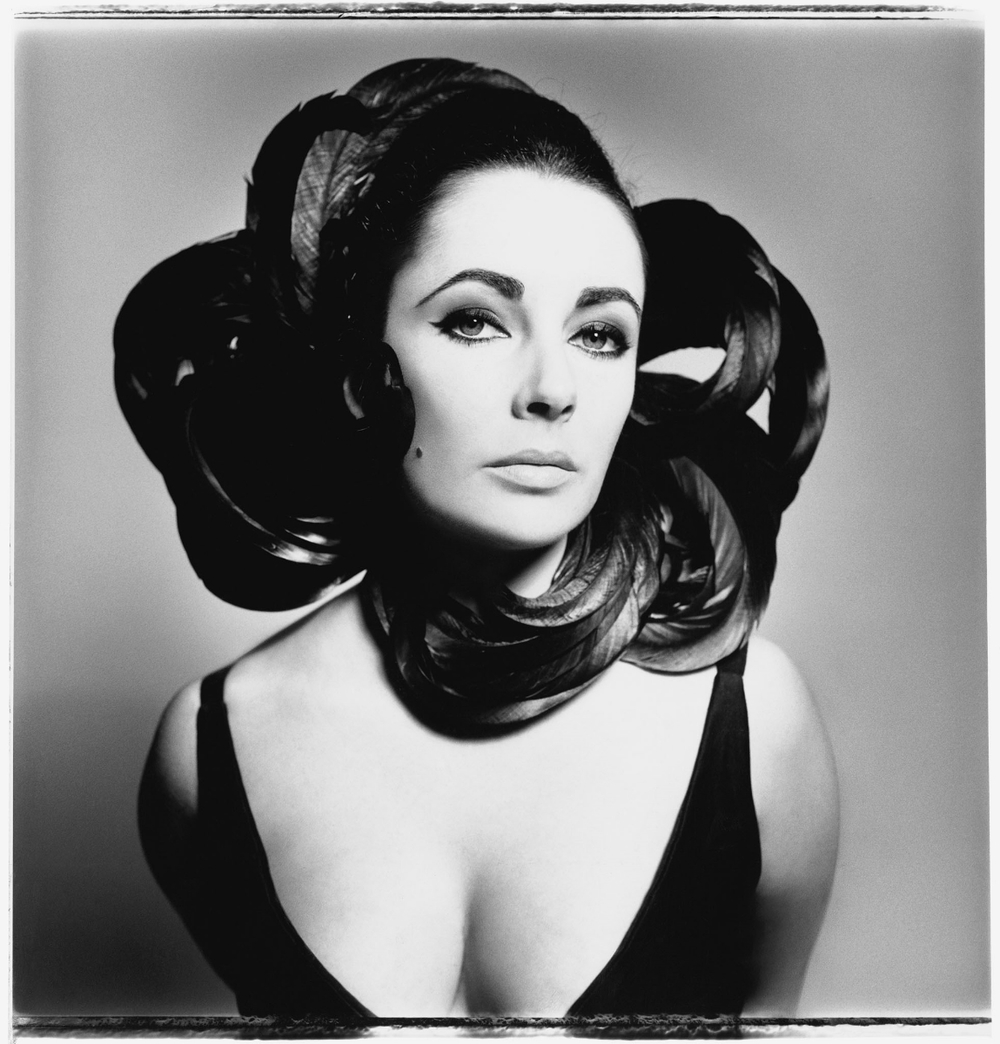
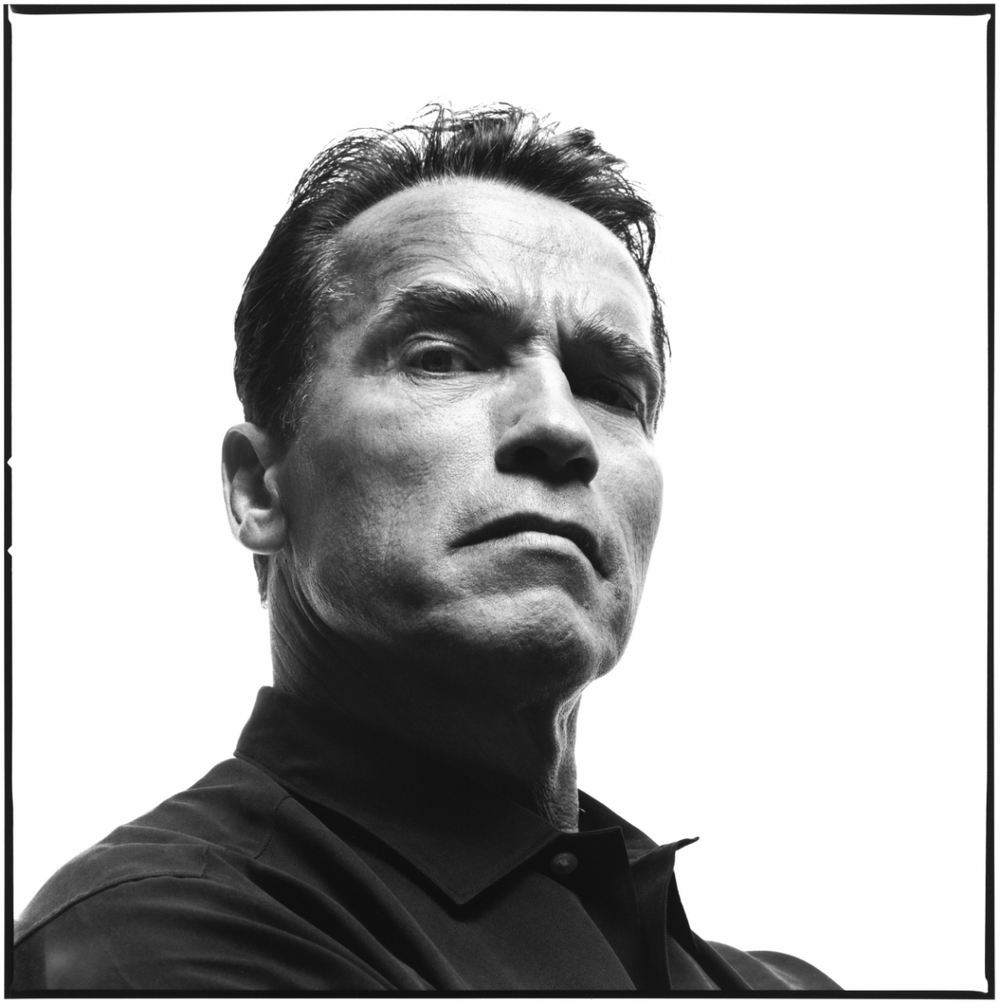
Avedon's photographs are easily recognisable for their use of high key lighting created by strobe lights and the psychological nature of his images where subjects are looking squarely at the camera and are full of emotion. Giving the viewer a real sense of how the subject thinks and behaves. I think this quality in Avedon's photographs is particularly potent and made even more effective with the bright minimalist background used allowing the subject's presence and persona to fill the image. 

The minimal, theatrical staging created by Avedon in his images shows the incredible amount of rapport Avedon was able to get off of his subjects. As his photographs show them in complex and multifaceted ways despite their simplistic, confrontational presentation. Showing how relaxed they were to reveal more about themselves for Avedon in front of the camera. 


Francis Bacon, Paris, April 11, 1979
One of my favourite pieces by Avedon is this diptych made up of two photographs of painter Francis Bacon taken in 1979. I found this piece particularly powerful because it is so evocative of the kind of person Bacon was. In showing the confusion and anxiety Bacon described as filling his life, as he was very resentful of his own existence. This very raw representation of Bacon I find brilliant as it references a lot of his own painted self portraits which although surreal, also showed Bacon's confusion and anxiety in regards to his existence. 

The questioning expression on Bacon's face I think is brilliant because although seemingly confrontational at the viewer, to me it suggests the awareness he has of the viewer looking at him and the confusion he feels in what they are seeing. In terms of his own identity and physicality in the world. 

Avedon contact sheets for The Shrimp:
Contact Sheet: Jean Shrimpton 
I found it really interesting when doing my research coming across some of Avedon's contact sheets. As they allow you to see with the markings added by Avedon what he is looking for in his final images, as for example in the contact sheet of Swinging London Icon Jean Shrimpton evidently he wants her to be exactly square on facing the camera. As well as having a more interesting expression showing something deeper about her personality. 

Seeing how Avedon has used his contact sheets and with our brief requiring us to compose them for the images we take in this project, I am becoming a lot more aware of just how useful they can be. Especially with portrait photographs as you often take lots of them which look really similar, so by having them side by side in this way it will allow me to edit down my images by seeings what works better in others in my subject's expression and what compositions are most effective. 

Studio Experiments 1

For my first experiments in the studios with formal lighting, I decided to try low key lighting against a grey background inspired by the work of Nadar. I also wanted to play around with getting more of my subjects in the frame as in the past I have mainly just taken shots of subjects showing the upper torso and above. I had my female and male model mostly sitting down during this shoot as I wanted to have more control over the direction their bodies were facing in the photograph. So I could observe more closely the effects of having my subject facing slightly different directions in the photographs. 


Of the photographs of my female model the one on the bottom right here is my favourite as I think she looks the most relaxed and herself in this image and I really like the way her chin is tilted upwards to show us a lot of her face while looking up into the distance. I think her hair was a particular issue in terms of showing her face in this shoot and I think the photographs of her stood up are more successful because of the camera being more parallel with her face, which gives us a better view of her eyes which I think is important and she fills more of the frame. However in theory it would be fine for me to go and crop the images of her sat down to get rid of this heavy amount of negative space in the frame.  


Of the photographs of my male subject this was my favourite as I like the shape created of the subject  in the frame and although not like the low key lighting of Nadar I do prefer this higher contrast of light and dark in my image by adjusting curves in Photoshop. I don't think I would crop this photograph as I think this heavy space above my subject is quite powerful and possibly says something more about what is going on inside my subject's head.