Showing posts with label Portraiture. Show all posts

20/11/2016

Nadar


After being given Nadar as my photographer to do my presentation on for PEP130, I decided that I would start doing my research on him early after being given our portraiture brief. As Nadar is a historical figure in the world of portrait photography and is well know for his portraiture work that he created in his own home of his friends and celebrities. 

Nadar was a pseudonym used by French photographer Gaspard-Felix Tuornachon as a way of branding himself. After moving on from being a caricature artist to a portrait photographer, Nadar opened a studio in Rue Saint Lazare in 1884 and became famous for photographing well known personalities such as politicians, stage actors, writers, painters and musicians. 

Nadar saw photography as being intimate, spontaneous and a collaborative performance created between the photographer and their subject. This suggests that portraiture has an element of theatrics attached to it, which makes sense as a subject is performing for the camera to a certain extent as directed by the photographer. This is really interesting to me because it has made me think about the degree of dramatic performance one could get from a subject in a photograph. Whereas I would prefer to get something more representative of the subject, even if that would create a more subtle impact rather than having them be a character for the camera to a certain extent. 

Subjects in Nadar's photographs are never smiling which is due to the long exposure times needed to create photographs with the technology back then. It would often take around 8 minutes which would be too long for anyone to hold a smile which is why they didn't, and they would also have a brace around their backs to keep them still. The serious expressions on the faces of Nadar's subjects I think are really powerful in revealing what a person is like. As this is not how they are in a single moment as it was captured over quite a long period of time, meaning we get a real sense of their character.


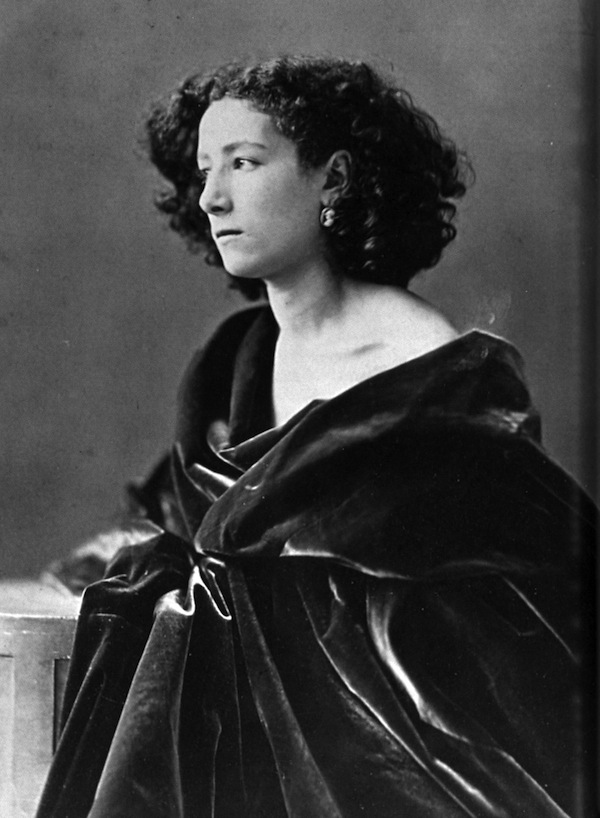
Above is one of my favourite photographs of Nadar's which is of French early stage and film actress Sarah Bernhardt. Nadar's characteristic use of low key lighting creates a rich range of values in the image which gives it real depth. One feature that I find quite potent in a lot of Nadar's photographs are how his subjects are often looking to one side of the frame. Which creates a real sense of movement in the image as it draws the viewer's eyes across the photograph in the direction the subject is looking in. 

The light background Nadar uses which appears grey in his black and white photographs paired with the low key lighting, creates real texture and depth in his photographs. Which I think adds to the emotion we feel in response to viewing the subject's expression as we look at someone lost in these minutes of stillness. In the photograph above for example the background feels as though to contain the subject rather than serve to isolate them for the image. Despite being an artificial setting it allows us to observe a sense of this person within an environment rather than drawing us straight into observing their physical appearance. 


Looking at Nadar's photographs in the context of this brief has given me a lot of formal techniques to try out in terms of lighting and positioning my subjects within a frame and against a background. I have often taken portraits where I have had my subject looking straight down the camera. as I became fond of having the subject look at the viewer rather than the viewer being solely the one observing the subject. However I now really want to experiment more with how I position my subject within the frame and where I have them looking. I also want to experiment with lighter backgrounds and low key lighting while doing my studio experiments next week. As our lecturers have booked out the studios for our group to practise using lighting in. 

28/07/2015

Taylor Wessing Photographic Portrait Prize 2014 // Review

As a northerner it is easy to feel isolated and removed from the happenings of our capital city here in the UK. Particularly at the moment, there are many discussions and debates taking place about how London values the northern half of Britain, and how much of a priority and a say we really have in regards to our government. As someone who is passionate about art I feel very fortunate this year especially that we are never short of culture across all parts of our island, as the Taylor Wessing Portrait Prize 2014 arrives in Sheffield. It is here from the 2nd of May to the 16th of August, and is the only place where you can see the 59 shortlisted photographs from the 4000 entries of the 2014 Taylor Wessing Portrait Prize, outside of the National Portrait Gallery in London. 

The exhibition is taking place in the Millennium Gallery, which is at the heart of Sheffield and has a reputation for being Sheffield's premier destination in displaying art, craft and design, and houses work reflective of Sheffield's heritage, particularly in metalwork as well as art and design exhibitions showing contemporary works of art. 

The prize itself has become an annual fixture in the National Portrait Gallery's calendar, and has built a reputation for reflecting and featuring some of today's brilliant and emerging photographic talent. The images shortlisted cover a wide range of traditional and contemporary approaches to portrait photography. The exhibition includes highly conceptual pieces of work, revealing images of famous faces, intimate photographs of friends, family and much more. What I particularly loved about the exhibition was the vast range of styles of portrait photography that really reinforced my appreciation for the discipline, and I also left feeling incredibly inspired in terms of my own personal photographic pursuits. 

Konrad Lars Hastings By David Titlow
From reading reviews and talking to other people about the exhibition, I found a common theme of criticism if you will for the judge's take on what exactly a portrait photograph is. The winning photograph by David Titlow could easily be challenged for not necessarily meeting the definition of portraiture, in it's including of three adults, a baby and a dog. On this alone some would argue, and I am inclined to agree, that this image has more of a documentary nature to it with its narrative of the morning after a large party with this intimate scene we are witnessing, of Titlow's wife and child along with friends. 

However it is hard to dispute this image's incredible quality and presence with the dreamy lighting and tones similar to that of the Golden Age of Dutch Painting. I personally find it very emotive and heartwarming in how the lighting gives the child such an angelic quality, which you can imagine is exactly how the photographer perceives their child. This quality conveys a real sense of preciousness that the couple see in their child which we all would do, which is reinforced by the mother's locked gaze on the animal that is being held incredibly close to her child. The photographer you can imagine is distracted by this playful scene between the animal and their child which they are intent on capturing, and this is very uplifting of course. Whereas the mother juxtaposes this completely with her alarmed expression and the way she is holding the child, very much prepared to quickly move them away should this peaceful scene be shattered by any aggression from the dog. 

As beautiful an image as this is, again it can very much be questioned on it's place in a portraiture exhibition and competition. However I do think the judge's are intending to play on the definition of portraiture to create a certain impact and really make you think. Prizes as big as this can be used as a platform to convey messages and ideas about a discipline, to impact very much how artists approach their subject matter and what is considered appropriate to that genre. In this situation I believe that the judging panel are twisting this idea of portraiture, in it being solely about representing a single person's likeness and personality in an image of them, and is instead referring to this idea that portraiture is in fact a way of representing the photographer rather then the subject. Through this image by David Titlow we can see very much what is definitive of him as a person. We can see his loved ones including his child and wife, with her old school friends back in Sweden where she is from. The image was taken on a camera that is very personal to the photographer as he has been using it to capture personal shots for years. From this we could argue that this photo is in fact a representation and therefore a portrait of David Titlow, rather than the subject matter I've commented on previously. 

Overall the exhibition felt more of a celebration than a commiseration to those who were shortlisted, with the winners by their side. There is a real sense of achievement in every image displayed that is there for us to appreciate, for their unique take on the discipline. I could spend a hours taking you through the entirety of the 59 pieces of work displayed, but instead I want to draw on some of the key themes I picked up on in terms of the curation of the exhibition, as each corner I turned seemed to reveal a new layer to the types of portraiture shortlisted. 

Boy With Stick Gun Playing World War III (Russia Versus Ukraine) By Margaret Mitchell
The Unsettling 
Some of the earlier images I came across in the exhibition were very haunting in communicating a wider narrative outside of the image itself. One of my personal favourites is the photograph above by Margaret Mitchell, which shows a young Russian boy out of a number she found playing with sticks. When she asked what they were playing they replied with the title of the image shown above. This is very emotive in reflecting these events that are happening in their society that are being fictionalised into the children's games. I think this is so powerful because violence and war is something that no one would want their child to grow up around, and as much as you may try and shelter your child from this kind of thing, children still know what is happening. 

I also found instantly when coming across this image that the context wasn't necessary to trigger an emotional response, and this is what I found with many images in the first part of the exhibition and that is why they clearly deserve to be shortlisted. As the real skill with creating visual art is being able to communicate something specific and trigger a certain response in a person, without needing anything else and for viewers not needing to ask too many questions in order to understand and interpret a piece of art.

Lenny Henry By Sarah Lee
Famous Faces
As you would expect with any major portraiture competition, there is a fair share of recognisable faces. However those that are shortlisted have a fundamental quality, in that they reveal something new or show the person in a way we are not used to seeing them. The image above of Lenny Henry was not actually placed with the other portraits of famous people and this is because it has a different purpose and is more conceptual, in that it was commissioned by the Guardian to accompany an article about the under representation of black and ethnic minorities on British television. Because of this the photograph is not so much to show this more vulnerable side of Lenny Henry as it may seem, but to in fact communicate this concern and worrying issue that Henry clearly feels very strongly about. 


Stella By Michele Aboud + Natalie Angel Miranda By Viviana Peretti
The Elegant
With many portraiture exhibitions you can expect an array of very pleasing images to look at in terms of showing the beauty and elegance in their subject matter. My personal favourite among these very graceful images of couples, drag artists and more is Stella by Michele Aboud. Which is a very simple but gorgeous image by Aboud taken of her neighbour Stella. I think the incredible use of tone and lighting is what makes this very simple image of this obviously very pretty woman, such a stunning portrait.


One Minute to Go By Robert Timothy + The Inheritance Project By Hayley Benoit


The Conceptual
Some of my favourite images among those shortlisted were those that were more conceptual or part of a larger series of work. One Minute to Go for example by Robert Timothy is part of a series that records newsreaders through portrait images in the last moments before they go live on air. Another image among these more conceptual pieces was a portrait photograph taken from a series called the Inheritance Project by Hayley Benoit. This series shows people styled to resemble old photographs of their parents. I find this series really intriguing and really recommend taking it a look at it, as the use of fashion really blurs the lines between generations and offers a fresh perspective on the act of children dressing up in their parent's clothes.

Drying Off By Chris Frazer Smith + Unexpected by Lenka Rayn H.
Children
Many of the brilliant photographs in this exhibition include children. Some as you would expect offer a more lighthearted and silly perspective on childhood, whilst others including the two images above have a more serious tone which the photographer has managed to capture in the children. Which is what I think makes these two images in particular so special. The image on the right is entitled Unexpected and is one of my favourite photographs from the exhibition. The photographer as they have shown through the title of the image, managed to capture something very surprising in this one of the two children they photographed. Many photographs of young girls as you'll know, don't come close to achieving the seriousness of expression that this subject has, and personally I think this emotion and even the slight pain we can see through this girl's face is really quite moving.

Arvi By Sami Parkkinen + Dog and Boy By Lawrence Cartwright
The Chucklesome
Many of my favourite photographs in the exhibition were some of the most witty. Two of my favourites of these images are above and play in particular on what being a child is and make a comparison between children, adults and animals. I went around the exhibition clockwise so I finished with these more heartwarming and uplifting photographs and they really rounded off what otherwise was quite a serious collection of photographic images. The winning photograph by David Titlow was also among these more youthful and soul lifting pieces of work.

Felix By Tracey Howl
Before I finish this review I just wanted to share my personal favourite photograph from the exhibition which is Felix by Tracey Howl. Aside from the rich tonal quality and the exquisite framing of the boy and his horse, what makes this image so special for me is this very special relationship we can see between the two subjects. I think the way Felix makes what is a very powerful creature seem so gentle and modest is very special, and to see this obvious affection and strength in this young boy is very uplifting to see. Both the horse and Felix are so striking with their beauty but what I really find the most powerful in this image is the contact we can see between the nose of the horse and the boy's hand, and also the way Felix doesn't feel he needs to keep an eye on the horse showing the strong amount of trust this boy has in this creature. I think I find this image so touching because it represents something that I think a lot of us desired as a child. Whether it's a close relationship with a pet or a mythical creature, I think as a child for me personally this kind of relationship with a creature was something I could only imagine or only experience through films and books.

Overall this exhibition of the Taylor Wessing Photographic Portrait Prize 2014 in Sheffield offers a well rounded but complex exhibition, which explores an abundance of approaches to contemporary portraiture photography. I really recommend a visit if you happen to be in the South Yorkshire area. To leave you with a thought that this exhibition creates, I want to draw on just how common it is in a lot of the work displayed to feature someone close to the photographer and who is therefore more comfortable a subject to use, and also to consider just how many of these photographs are very carefully staged rather than being spontaneous in nature. Considering that many portrait images that seem to be of this nature have been shortlisted, do you think these components are important in creating a successful portraiture photograph?

06/11/2014

Some Lost Portraiture Photos


When doing my Marta Bevacqua inspired photos back in September half of my photos could not be recovered from my memory card. Finally I have managed to retrieve them, these are my favourites.


13/10/2014

Project Evaluation | Portraiture


I really liked having portraiture as the first project theme, I feel like it gave me a lot of structure to begin finding my photographic style which I was very unsure about to begin with. But having researched the photographers I’ve looked at and learning about photographic techniques, I feel like a have a lot more sense of my preferences and style in photography. 

I enjoyed learning about film photography and developing my film photos which I found really interesting, but most of all I enjoyed arranging and doing my own little photo shoots which gave me a lot of independence and control, which I liked as it gave me a chance to experiment and get the feel of what it is like to be a professional photographer. The most I have experienced in terms of new techniques when doing this project is the use of artificial lighting through using flash in my photography and using, and developing film which I have never done before. I would like to develop both of these techniques in the future especially with how to use studio lighting and to get better and be more creative with film photography. 

Throughout this project I have researched photographers and learnt a lot in terms of my preferences in photography and developed my own techniques through observing their work and the techniques they use in their photography. The main technique I took from a lot of the photographers I looked at was how to use natural lighting and make the most of it in my photographs. For example Alessio Albi used low naturally lit settings to add mood and atmosphere to his photos and Marta Bevacqua used the nature around her subjects to create shapes with sunlight. Other than the use of light the photographers I’ve researched have also influenced my photographs through composition, framing and the use of natural surroundings to compliment and add to the representation of the subject.

The parts of my project I feel were the most successful, was the photos I took inspired by Helen Van Meene and Marta Bevacqua. This is because I feel I took inspiration from them and inputted my own photographic style, but did not try to copy them directly, and I do think for photos I’ve produced very early on the course they look quite professional.

I didn’t encounter a great deal of problems during this project however I did struggle at first to create my test strips for my film photos, especially with my first one as I didn’t fully understand the technique at that point. I also struggled in my final images to find similar colours and natural surroundings to those in the paintings I referenced, and I do feel they are a little disconnected from the paintings and not as easy to make the links between like in Tom Hunter’s work. If given the chance to do this project again I would plan out my film photos more in terms of how I was going to set up my shot, and the expression, and position I wanted my subject to take. I would also do more work inspired by Rineke Dijkstra, as I wanted to improve the photos I took of strangers by setting up my camera on a tripod in one place, in my college and asking passing strangers to pose for a photo, like in Dijkstra’s beach series.

The work I have done in this project will influence my future work in terms of the skills and techniques I have learned and developed, for example I would like to do more film photography now that I have tried it because I like the effect it has on photos, and now that I can use a 35mm SLR camera and develop film, I can use it in my future work . Things like my photographic style that I have developed will influence my future work in terms of how I like to edit my photos and the compositions and lighting I will use. 

Overall I have really enjoyed doing portraiture as my first project, and now feel more confident going on to do future work in this course as I feel I have a good understanding of basic photographic techniques, and have a feeling of my style as a photographer. 

Final Photos | Portraiture


The first of my chosen photos from the shoot references this Mallais painting. For my interpretation I put a yellowy brown filter over the top in order to mimic the earthy tones used in the painting. I also had my subject in a similar position with a similar expression on her face. To me this photo represents the contrast between modern day fashion and beauty in comparison with that of victorian times, and that the subject still has this poetic expression and gaze despite the massive differences in society and social circumstances.


When searching for pre-Raphaelite art to reference I found this common theme of the female subject holding up a flower to her face. I decided to have my subject hold a plant in a similar way but because the expression of my subject and her proximity to the plant was different to the paintings, I made sure to flip the original photo so you can see this link I have made referencing the paintings.

For my final and favourite photograph from my final shoot for portraiture I referenced two paintings, the first of which being by Eleanor Fortescue Brickdale where we can see the subject’s torso and head appearing from a flower bush. The second is by John William Waterhouse and shows the subject laying in a field. Initially I set out to find a similar flower bush to situate my subject within, only making reference to the Brickdale painting. However we came across some rocks and my subject suggested we try using them instead which I really liked the idea of, however when positioning my subject I thought that having more of a similar pose to the subject in the Waterhouse painting would better show this tragic and empty expression, that the majority of the pre-Raphaelite subjects have. Personally I like how you can make a connection with the two paintings and that I have changed the framing and used my own style. The only thing I would have done differently is to have my subject’s face pointing towards the camera as you can’t really see the expression on her face, although the fact you can see her gazing away does still create this sense of distress that she feels.


Photos From My Final Shoot | My Favourites


My Final Shoot For Portraiture | What I Did + Contact Sheet

For my final shoot I experimented with lots of different ideas and compositions to attempt to reference pre-Raphaelite paintings I’d seen, because of this I took over 300 photographs on my DSLR and created some contact sheets in order to choose my favourite photos.


For my shoot I purposely picked a subject who didn’t have red hair as to add my own style to my photos rather than directly trying to copy paintings of people like Elizabeth Siddal. I really wanted to make the most of using autumnal foliage with my subject so ventured around my local area like Tom Hunter to find interesting plants and landscapes to have my subject interact with.

I had saved images of the paintings on my phone to help communicate with my subject, to get exactly what I wanted from her, in particular with her gaze and head position in the photographs, which for me were very important in getting my subject to represent this metaphor of the tragic heroine. I took the photos on a low aperture in order to keep my subject more in focus, as in the paintings I have looked at the backgrounds often have less detail in them and are quite dark, drawing more focus to the brighter and more detailed subject. In comparison to my Hellen Van Meene inspired shoot I was a lot more aware of the position and expression of my subject and how to make the most out of the natural light. I also used a clear UV filter on my lens to take away harsh highlights created by the sunlight to create more of these mid tones that are very dominant in pre-Raphaelite paintings. 

Tom Hunter

In the photo on the left Tom Hunter has referenced Millais’ Ophelia painting

Before doing my own pre-Raphaelite interpretations I decided to look at photographer Tom Hunter’s work, who references paintings for modern day representations in his photographs. Tom’s work is really interesting as he takes all his pictures around Hackney and uses them to depict social issues and news headlines, as well as referencing paintings. 

The way he makes the photos his own, as well as making a clear link between paintings shows such skill in terms of the composition of his photographs and editing to make the colours as vivid as in the paintings he references. Personally I think Hunter’s intentions with his photography is to challenge this contrast between what we consider the olden days and modern society by putting the two together in this way. It really makes you question whether people can still be represented in poetic and romantic ways like in pre-Raphaelite art where we see themes of Shakespearean tragedy.

I really love Hunter’s interpretations of the pre-Raphaelite paintings and the other themes he brings into his work. For my photos I really want to make a link with the paintings but also make the photographs my own in terms of style and composition.

Pre-Raphalite Art


After taking my Hellen Van Meene photos and making the connection between them and pre-Raphaelite art I have done some research into pre-Raphaelite art in order to influence the next photos I take which I want to be influenced by the brotherhood’s paintings. 

The Pre-Raphalite brotherhood formed in 1948 and included artists such as Rosetti and Millais, the group was formed as a revolt against the art establishment of that time. Influenced by Victorian painters such as John Ruskin, the group’s paintings took influences from Shakespeare and myths and legends, using vivid colours to create these romantic pieces of art.

A common subject used in paintings such as Hamlet’s “Ophelia” by Millais was Elizabeth Siddal. She and many others in pre-Raphaelite paintings represented the tragic heroine, often looking away into the distance looking distressed and poetic. For me pre-Raphaelite art is so expressive and such a romantic representation of the subject, and I’d love to be able to convey these themes in my photography and this idea of life imitating art. 

Taking Some Family Portraits

The other day I got the opportunity to take some portrait's of my friend's family. It was getting later on in the day so we decided to venture to a local park to get some better lighting for some more natural shots. As I know the family it was easier to make the shoot more relaxed to get these more natural shots of the family together. Looking back I wish I'd communicated better with them in terms of how to get the best photos and poses to make, but overall I think I have managed to get some nice representative shots of the family. 


09/10/2014

Taking Photos Of Strangers

As more of an experiment than anything I took on the challenge of finding strangers to take portraits of to work with this idea of representing someone in a photograph. Inspired by Rineke Dijkstra's beach series I took photos of people working around the college adopting a more quick point and shoot technique of capturing these people's responses to having their portrait taken. Doing this really helped me learn how to communicate with my subject when taking a photograph, I feel like you can tell what these people are like through these photos despite not being able to see much of their surroundings.
 
Next time I take photographs like this I would like to use the same minimal background, and keep my camera in the same place on a tripod, because as a series of portraits you do notice the difference in backgrounds as well as the different subjects which I'd like to take away to keep more consistency with my pictures and keep the focus on the subjects more.

08/10/2014

A Self Portrait


As our project title is portraiture it only seems right that I attempt at least one self portrait. The interesting thing I found doing this self portrait is that I had control of how to pose and position myself whereas with taking photos of other people you need to have that communication to get the shot you want which can be difficult. Also with taking a photo of yourself you have the control over how you come across. For my photo I was unsure at first how I could fully represent myself, so I decided to keep it very casual and I just set up my tripod in my living room in front of a window for the best natural lighting. 

Personally I think this is a good representation of me as a person, I made my face the focus of my portrait and didn't smile massively or present myself too confidently as I am a very reserved person. Through doing this I've learnt more about representing the subject in a portrait photograph and in my next photos will be taking the extra effort to communicate with my subjects and ask them what their favourite pictures of them are and how they would prefer to be presented.

28/09/2014

Inspired By Helen Van Meene


Dutch portrait photographer Hellen Van Meene is well known for her portraits of mainly young girls taken using a film SLR camera. Meene works very technically with light to focus on her subjects in the cold crisp environments she uses. Meene says she specifically chooses subjects who have never modelled before and who aren’t particularly attractive as a challenge for her to give them beauty in her portraits. Describing one of the girls she found in her neighbourhood to photograph she says, “she’s just a girl who’s a bit too chubby, a bit giggly, a bit nervous and insecure”, personally I really like this element to her photography as there are so many well known portrait photographers who just cast beautiful models for their photographs. This approach to photography really appeals to me rather than ultra glamourised fashion photography.

My Interpretations


For my interpretations of Meene’s work based on the photograph below, I used my camera’s flash to control the light where I was shooting these photographs at night. I decided to do this as Meene’s work is very much about the use of light and it plays a big part in the picture I took inspiration from which has a dark background and the subject is very lit up. I also made sure my subject was not looking directly at the camera like in Hellen Van Meene’s photos and I put a blue filter over my photos to give that cool temperature that Meene’s photos have.


So far all I have used is natural lighting in my photography so I decided to try using the flash on my camera for my Hellen Van Meene inspired shots. Like my previous photos I have still used nature as a main component of my portrait photos just to see how the use of an artificial light affects the photos. Personally I really like the results, I know that using proper lighting rather than my camera's flash will have a much better affect on the quality of my pictures but as an initial experiment I really like the way it works with emphasising my subject and her features picking up colour and form rather than texture.